2014 Roadtrek demo on the new electric awning. This may also be helpful for 2013 or older Roadtreks if you are having a hard time setting up you manual awning.
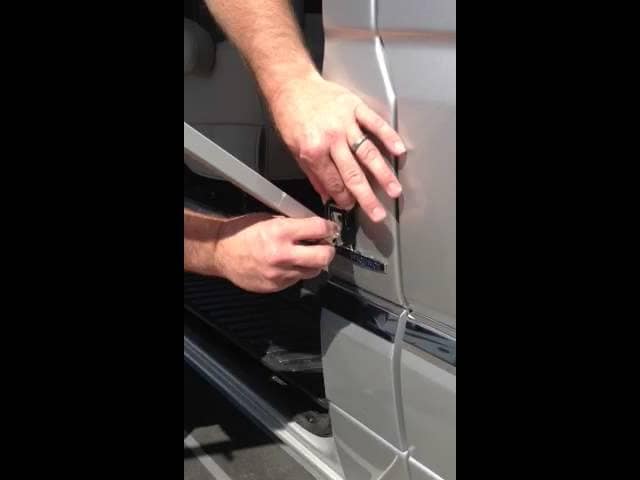


2014 Roadtrek demo on the new electric awning. This may also be helpful for 2013 or older Roadtreks if you are having a hard time setting up you manual awning.
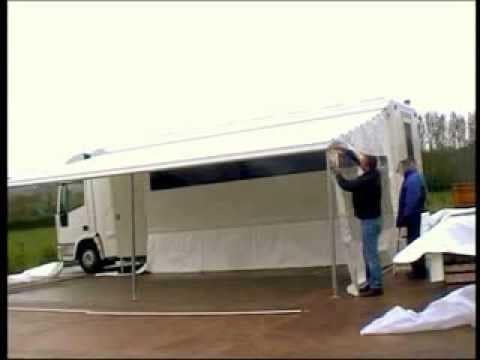
A Speeded up demo on how to install a Barkers Windout awning – in reality it takes 2 people about 10 minutes to fit this 7m x 4m awning.
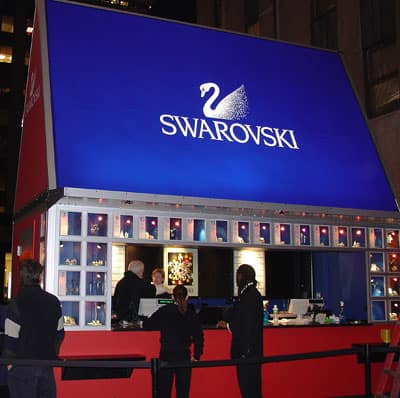
 The ancient art of Feng Shui, a Chinese system of improving “energy” flow, states that the entrance to a home or business is the “mouth”, and it governs the quality and amount of energy flowing into the building. Whether or not this is true, it can’t be argued that the entrance of a building needs to make a good first impression. It should be clean, nothing should be broken, and the name of the company should be easy to read and clearly visible. If there are any potted plants by the entrance, they should be healthy and attractive as few things spoil an entrance more than dead plants. Symmetry is also useful in creating a neat and professional image.
Awnings are a timeless classic and can make any entrance look smart. For a restaurant, a black awning with gold or white writing makes a real statement. Black awnings are perfect for a cosmopolitan bar or a trendy nightclub.  Forest green is another popular choice, great for a little Italian restaurant hidden among some ivy. Lime green is excellent for a health store as it brings to mind new growth and freshness. For vitality and energy, red won’t disappoint and this would look great at an office entrance, especially when paired with grey walls. Turquoise or bright blue is a great choice for a store selling purified water and the logo can be printed on the awning in white, a great color combination. This works best if the company logo is a very simple one, as too much detail will get lost. Whatever color you choose, choose wisely because the awning will be around for a long time!
Awnings don’t just belong at entrances; they can be used all over. Restaurants in particular use awnings a lot to shade the outdoor seating area, either to extend the size of the available space or to provide a comfortable smoking area. Many awning companies also extend their range with car ports, window blinds for the interior, outdoor umbrellas, etc.
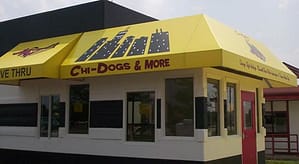 There are a variety of different awning styles to choose from too. There are box shaped awnings, semi-circle or dome shaped awnings, and the awning can have a valance added too. A valance is the “frilly” part at the end of the awning. Valances are best suited for an old fashioned or historical building though. If the awning is not a fixed feature at the entrance then a retractable awning can be installed to extend the life of the awning and protect it during extreme weather. Retractable awnings are great for balconies to provide protection during Friday afternoon drinks at the office for example.
based in Dubai has been providing top quality awnings and related products and services since 1990. With so many years of experience they are well positioned to provide excellent service, affordable prices and sound advice.
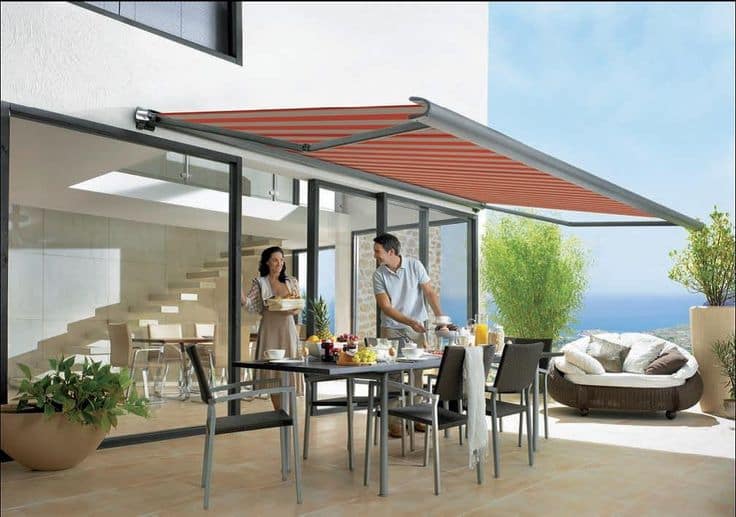
 Awnings have moved from functional sun and rain coverings to architectural additions that can simultaneously enhance a building’s exterior charm and communicate the business owner’s message.
Before air conditioning was invented, the primary purpose of an awning was to provide shade from the summer sun. Storeowners folded up the retractable awnings for the winter months. Today, awnings are more often installed for advertising than for weather protection purposes. Retailers and restaurants, among others, have adopted awnings as signage and the result is a more attractive storefront that communicates the brand.
Experts say awnings present revenue opportunities, and companies are offering some innovative new material, design and installation options to help signmakers profit from this advertising trend.
Don’t Forget Field Surveys
But before you even begin choosing materials or thinking about design, experts suggest conducting a survey of the building. Take a camera to photograph the exterior, investigate the fire and installation codes, and ask the owner lots of questions before starting the job.
The type of business, its hours of operation, and the architectural style of the building all play important roles in selecting the awning style, graphic design elements, substrates, and method of installation. If installers show up with a 40-foot awning, for example, and there are encumbrances on the wall that the awning won’t fit around in middle of the wall, then you are costing your shop time delays and financial losses. Planning is essential.
Making the Most of Materials
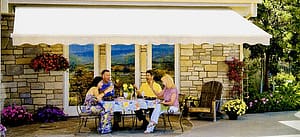 Once you understand the customer’s needs you can choose the awning fabric. Flexible-face materials are revolutionizing the use of awnings. 3M’s films, elegance seamless white awning substrates, and Firesist are among the most popular solutions on the market.
3M’s Panaflex is a flexible face system used by many signmakers for canopies, awnings and seamed pylons. Signmakers note this substrate’s built-in resistance on its smooth, semi-gloss surface. A polyester scrim embedded between white-pigmented vinyl layers makes the material durable.
Cooley, the first company to develop translucent materials for signs and awnings, recently introduced its Cooley-Brite II eradicable substrate with an eight-year warranty. The Coolthane Enhanced Protection System, a clear, protective layer, makes the material more flexible and durable than most other options.
Seeking Seamless Substrates
Seams frustrate sign makers because they can detract from the awnings’ appearance. Some jobs, then, require a wider, seamless material. Cooley recently introduced its Coolflex 5 Meter Seamless substrate. Coolflex is a front-lit PVC substrate offered in a variety of weights and widths ranging from 8’3″ to 16’4″.
“Inevitably, wherever there is a seam you will have a dark spot when it is back lit and that impedes the ability to see the graphics at night.”
Fire Resistant Flexible Face
Glen Raven Custom Fabrics offers Sumbrella Firesist Plus, a flame retardant fabric woven from self-extinguishing fibers that meet the requirements of leading commercial building codes.
“We developed Sunbrella Firesist Plus to meet a specific need in the market for a fabric that could not only meet fire codes, but also provide increased water repellency,” says Al Johnson, Glen Raven’s director of business development.
Colors, Shapes and Sizes
With a good grip on the architectural elements of the building, the needs of the customer, and the required materials, you can help the client choose an awning style.
There are many different awning shapes, including lean-toos, radius, domes, and waterfalls, to name a few. The shape helps set the mood for the business. Choosing the right style is important because the awning can change the entire face of a building for better or worse.
“Some customers have a box-shaped building and want to put a quarter barrel awning with domed ends on it,” said Michael Gillum, head of the design and textile fabrication department of GPS Specialty Construction, Inc. “That detracts from the building.”
Likewise, if a building has arch top windows, a lean-too awning (shaped like half of a pup tent) would not match the architecture. A radius awning would be more appropriate in that case.
Gillum says forest green is his bestseller and notes that black awnings have also become chic over the past few years. But companies with established logos have distinct color schemes; therefore, the trend is toward customized color. Eckerd’s, for example, has its own shade of blue that is consistent throughout its marketing materials and signage.
Getting to the Graphics
If the awning is sold as a sign, then graphic art becomes the next consideration. In fact, you have to consider the graphics before you complete the frame structure. With a lean-too awning, for example, the top half of the material contains graphic placements that are not obstructed. But if you don’t plan properly the frame could interfere with the verbiage on the bottom portion of the awning fabric.
“If the awning is over 20 feet long, it is generally going to be two pieces,” said Douglas. “You have to find the break in the awning to make sure there is not a word where the bolt would be, because when you bolt it together you are not going to be able to see the word at night.”
One common mistake beginning sign shops make is using too many graphics. Deciding the number and size of graphics depends on the location. For example:
“You always want to put up graphics that are readable,” says Douglas. “You don’t have to put every item in the store on the graphic. You want something catchy.”
Installation Options
Once you’ve decided on the material and design issues, it’s time to install the awning. Basically there are two options: the old way and the new way.
Traditional awning installation requires building a frame to specifications using steel and bolts. But a new system makes fabricating awnings much less time intensive. It is Milliken’s Staple System, a user-friendly system for attaching fabric to a structurally sound aluminum frame.
“It can take two guys between two and four hours to tension the face of an 8’X10′ awning,” says Steven LaFountain, Milliken vice president of sales. “With our Staple System a single person can tension the same face in less than 20 minutes.”
The system requires no sewing, can withstand winds up to 110 mph and a snow load of up to 35 pounds per square inch. The system also allows some unique shapes that would be extremely difficult and expensive to reproduce with traditional frames. The Domino’s arch signs use the Milliken System with 3M’s Panaflex film and specially designed extrusions. The orange curve-shaped piece under K-mart’s “Big K” advertising is also constructed with the Milliken system.
Learn About Lighting
Finally, it is time to light the awning. Lighting styles depend on the purpose of the sign. Generally, you can down light (light from above), back light (light from within) or front light. Like shapes, lighting sets the mood for the establishment.
So with that in mind, what kind of store is it? If it is a movie rental house, for example, you want internal illumination. Some video stores, and other retailers who do business at night, use two rows of double bulb, high output lights to give the environment a safe, bright feeling. Retail and fast food is typically backlit. Casual sit down restaurants like Applebee’s, or high-end coffee shops like Starbucks, are typically down lit. High-end restaurants and retailers find front lighting works best for them.
The latest trend is eradicable substrates where you back light opaque materials to make the letters visually pop off the substrate. Less translucent materials require more light than opaque materials.
Deciding how many lights to use depends on the height of the awning. The general rule of thumb is at least one single bulb fixture for every four feet of vertical height. If the awning is more than six feet tall then double bulb fixtures work better. Avoid lighting that overpowers the building or its surroundings. Experts say it is better for the awning to be under lit than over lit.
Once the entire process is complete, take photos to add to your portfolio so that you can show your work to other companies looking to spend a little for a big change in the appearance of their buildings.
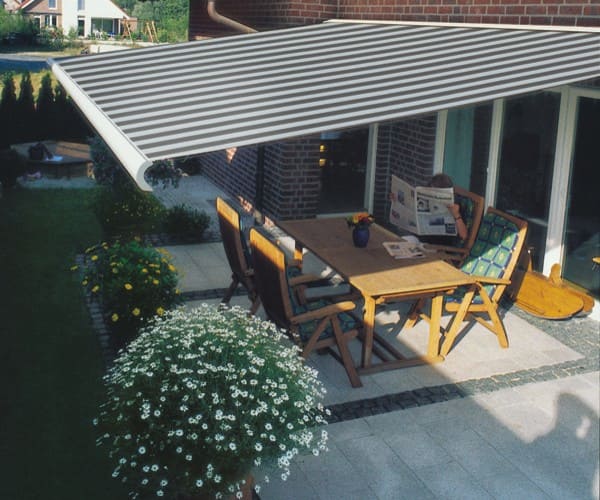
 They are used for protection against sunlight, rain, snow and wind and are generally attached over windows, doors and sidewalks. By using poles for support awnings can be stretched over a large area.
The material used for awnings is acrylic cloth or canvas. Beautiful and attractive patterns can be printed on awnings to get an aesthetic appeal. Today an awning can be made to almost any design, shape and color.
The framework for awnings is generally made of wood, iron, steel or aluminum. Aluminum is preferred as it is lighter than iron or steel. The framework consists of trusses, border frames or space frames.
Awnings attached over the windows protect windows from sunlight and help in keeping rooms cooler. For air conditioned rooms awnings can bring down the electricity consumption by almost 25%. A very good saving.
There are many companies providing awnings. Most of them do free costing and provide free estimates. Awnings are a very popular way for advertising business and come in attractive colors, graphics, fonts and patterns.
Awnings add color and brightness to a place. Awnings can be backlit or front lit. Backlit material for awnings is different than front lit material. Vinyl laminated or coated polyester is used for backlit awnings. The other material used for awnings is PVC coated mesh, Acrylic, Vinyl or resin coated polyester, Acrylic painted cotton/polyester, etc.
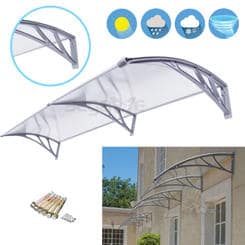 It is prudent to insist on fire retardant material/paint on awnings. Generally awnings are not covered by insurance. Some awnings are temporary and can be retracted. Most awnings are retracted during winter to prevent awning damage by collection of snow. The retraction method can be manual or motorized.
The cleaning of awning for removing mildew and stains is fairly easy. It can be done with mild soap and a soft brush. Vinyl awnings mildew easily.
The design of the frame for awnings should be such that no water pools on the top of the awning. Pooling of water on awnings can damage the awning cloth and the graphics printed on it. Wind gusts of more than 25 miles per hour speed can also damage awnings. During strong winds it is vise to retract them.
The graphics on awnings can be printed on by special machines interfaced with computers. The print quality depends on the number of columns per inch (cpi). A 10 cpi print gives a good finish on most awnings. A 25 cpi print gives a very fine finish to the awnings.
In some states you need a permit for putting up awnings. Though for most residential awnings permit is not required and is restricted only for commercial awnings.
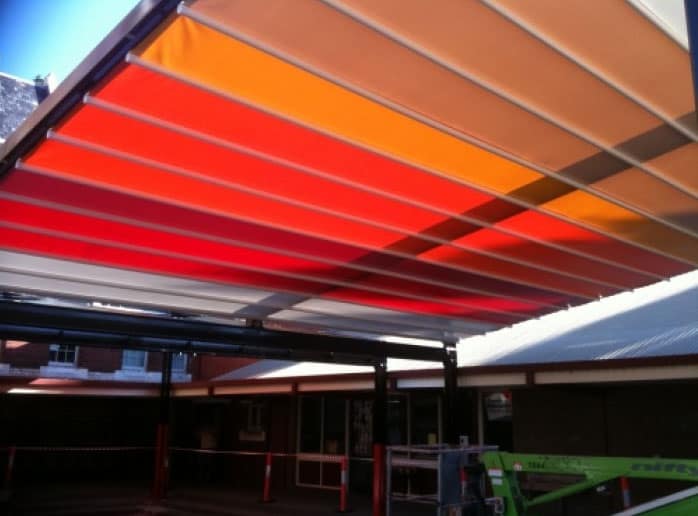
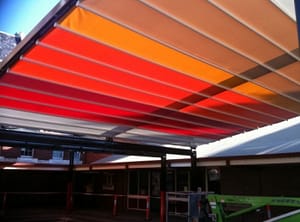 Once you have the full size pattern for an acrylic awning, the painting involves three basic steps. While lettering an acrylic awning is not a simple and snappy as counting “one-two-three,” careful attention to each of the three steps can make the job seem fairly routine.
The three basic steps? First, you mask-and-cut. Second, you roll on the paint. Third, you add the secondary color.
Step one-the masking and cutting-represents a critical first stage in the awning painting project. Measure and cut the vinyl material. Be sure you cut enough so that the vinyl is larger than the usage area.
Then expose the sticky side of the cut vinyl material. Spray the sticky side with a reliable adhesive. Be sure the entire area is coated. Do not try to save a few pennies by skimping on the adhesive. The coating application should be moderate-to-heavy. If the coating is too light, there will be no adhesion and the job isn’t done. If it is too heavy, the worst thing that will happen is that you will have to do some cleaning up later near the end of the job.
Spray the vinyl away from the awning. You do not want the adhesive spray to get on the awning-or on anything else that might be messed up by a sticky film. If it does go where it isn’t supposed to, then you really will have a big clean-up job later!
Wait five to six minutes. In that time, the spray adhesive on the vinyl will be setting up so that the vinyl will be ready to be applied to the designated area of the awning.
Apply the vinyl to the awning. Depending on the size of the vinyl, you may or may not need some help from a co-worker applying it to the awning. Once the vinyl is applied to the image area, be sure to squeegee it flat. Nice and flat, nice and smooth.
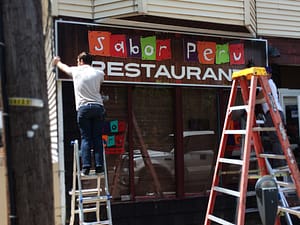 Cover the vinyl with transfer tape. The tape protects the vinyl mask. If you do not cover the vinyl mask, the solvents in the flat vinyl silk screen ink will damage the mask. After several coats of the ink, the unprotected vinyl may not hold up and keep its integrity.
Once the mask is covered, position the pattern and the pounce. Taking a sharp blade, carefully cut the image. Take your time. As you know, you are cutting through the protective transfer tape and the vinyl mask You do not want to do any non-reversible cutting. You might even consider a test cut on a vinyl scrap with transfer tape on it to get a feel for the coming task. Cut and weed the entire image. Then squeegee the image to be sure it is flat and smooth.
The first of three steps are complete. Now it is time for the “painting” or more accurately the inking. This second step works out best for the awning and you if it is done in one uninterrupted operation. Once you begin to roll the ink on, you will want to roll until the graphics are fully opaque. This is a continuous process that might take up to three coats of ink.
Set up a cloth roller and your paint tray. Use a flat vinyl screen ink. This ink is best because it dries quickly, does not bleed, and is opaque and flexible. Let the ink or “paint” roll. Remember to keep it rolling until the graphics are fully opaque.
You need not worry about your mask. The transfer tape is keeping it from wrinkling and collapsing as you apply the necessary coats continuously.
Once the painting is complete-can we repeat “opaque”?-you can take a break to wait for the ink to dry. But don’t go too far because vinyl silk screen ink dries quickly.
Once the ink is dry, the end of the job is in sight. Remove the mask and check your work. If there is any dried bleeds, they can be scraped off with a stencil knife. Carefully.
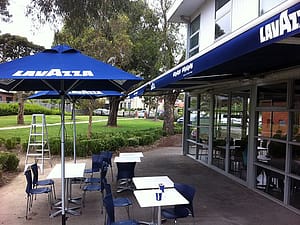 If there is any adhesive residue, you can remove it with a little lighter fluid, a clean rag, and some human “elbow grease.” (The job is nearly done-you can afford bad jokes!)
However, if customers want secondary colors and additional painting (which costs more, of course), you must take that third-and last-step.
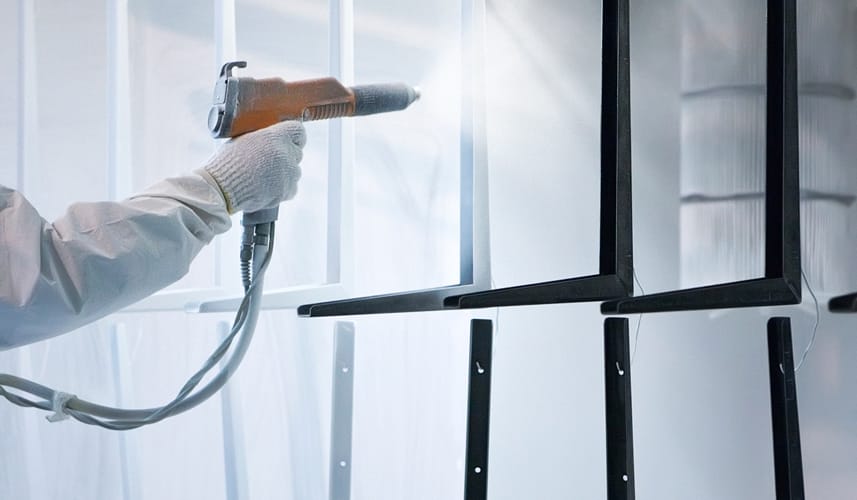
Powder coating is gaining the attention of the awning industry because it’s durable, environmentally friendly and cost effective.
After decades without much innovation, the sign industry is rapidly adopting new technologies and techniques to make its products look better, last longer and cost less.
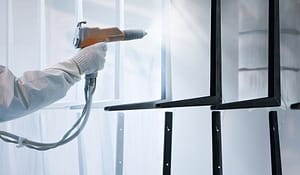 While there’s been much ado about digital printing and with good reason there is a quiet revolution beginning in the awning segment of the industry. Call it the powder coating movement and expect the term to become a household name for awning makers in the years to come.
What is powder coating, you ask? It’s an advanced method of applying decorative and protective finish to a wide range of materials and products. The process uses a powder (a mixture of finely ground particles of pigment and resin). That powder is sprayed onto a surface as an alternative to paint.
Here’s how it works: The charged powder particles adhere to the electrically grounded surfaces. The surface is heated in a curing oven and that heat causes a fusion between the powder and the surface to produce a smooth coating.
The result is a uniform, durable, high-quality, and attractive finish. That’s one reason why powder coating is the fastest-growing finishing technology in North America, representing 10 percent of all industrial finishing applications, according to the Powder Coating Institute.
Indeed, powder coating has gained acceptance with appliance manufacturers, automakers, architectural lawn and garden hardware manufacturers, and sporting goods markets, along with a laundry list of everyday products. Now, the awning industry is grabbing hold of this not-so-new technology to transform its finishing process. Awning Innovations and Systems Awnings are two manufacturers on the leading edge of the powder coating trend.
“Powder coating is becoming more and more popular,” says Brett Hodges, vice president of Awning Innovations, a flex-face and awning manufacturer with offices in Indianapolis, Dallas and Winston-Salem, N.C. “We are seeing a lot of Elegance products with powder coated frames. We are working on getting in-house powder coating operations at two of our facilities, which would be a big move for us.”
The Not-So-New Kid in Town
Powder coating as an electrostatic finishing process was first developed in the mid-1950s. The process hit big in the 1980s and gained momentum in the 1990s. North American powder coating production grew from 66 million pounds in 1986 to 269 million pounds in 1996, a 308 percent increase. Today there are more than 5,000 powder coating systems in operation across North America and total annual sales of North American thermoset decorative powder coating materials has reached $1 billion.
Farmers have powder coated tractors and farm equipment. Fitness buffs use golf clubs and golf carts, ski poles and bindings, snowmobiles, bicycles, and exercise equipment that are powder coated. Shop owners have powder coated display racks, shelves, store fixtures, and vending machines. Office workers use metal furniture, computer cabinets, mechanical pencils and pens, thumbtacks, and other desk accessories that are powder coated. And homeowners have lawn mowers, snowblowers, barbecue grills, patio furniture, garden tools, electronic components, bathroom scales, toolboxes, and fire extinguishers that benefit from a powder coated finish.
Powdered Advantages
Why all the hubbub about powder coating? There are many advantages to the powder coating process versus traditional paint. The industry claims that powder is more durable than paint, cost less than paint and lasts at least as long as paint.
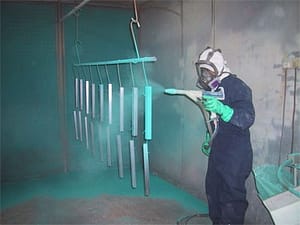 “Powder coated surfaces are more resistant to chipping, scratching, fading, and wearing than other finishes,” says Jeff Palmer, spokesperson for the Powder Coating Institute. “Color selection is virtually unlimited with high and low gloss, metallic, and clear finishes available. And colors stay bright and vibrant longer. Texture selections range from smooth surfaces to a wrinkled or matte finish, and rough textures designed for hiding surface imperfections.”
Powder coating is also environmentally friendly. While liquid finishes contain solvents that have pollutants known as volatile organic compounds (VOCs), powder coating contains no solvents and releases negligible amounts, if any, of VOCs into the atmosphere. That eliminates the need for costly pollution control equipment.
In fact, one of the major catalysts for growth in the powder coating industry has been the implementation of stringent air pollution control legislation over the past three decades. Finishers who use powder coating can comply more easily with U.S. Environmental Protection Agency regulations.
“Powder coating is a lot easier to clean up than paint. With paint you have liquid paint sludge to dispose of,” Palmer says. “Much of the over-spray powder that doesn’t stick to the part can be recycled and reused. It’s those factors that have really helped the powder coating industry take off.”
With no VOCs, the air used to exhaust the powder spray booth can be re-circulated directly into the plant, eliminating the cost of heating or cooling the make-up air. Palmer says energy is also saved with the curing ovens. Solvent-based coatings must heat and exhaust huge volumes of air to ensure that the solvent fumes do not reach a potentially explosive level, but the exhaust requirements in powder coating ovens are lower. “Powder coating is more efficient because it requires no drying and more parts can be coated automatically,” Palmer says. “Powder coating does not run, drip, or sag, and this results in significantly lower reject rates.”
Setting Up to Powder Coat
In terms of investing in equipment, Palmer says getting set up to powder coat is about the same cost as getting set up to paint, but the powder is less expensive and the payback is quicker.
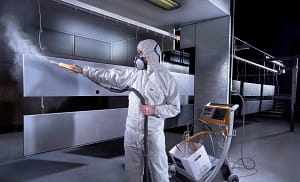 To get started, you’ll need a powder application gun, powder, a booth or enclosed area within which to spray the powder, and a curing oven to melt the powder. The size of the oven depends on the size of the part.
“One of the criticisms that liquid paint advocates have with powder was that it took too long to clean the guns and change colors,” Palmer admits. “That issue is being addressed by the equipment manufacturers who are finding more efficient methods.”
While powder coating started as an alternative to finishing metal products only, the development of powder that can be cured at lower temperatures is allowing powder coating to expand to non-metal surfaces such as ceramics and some wood and plastic applications.
“Powder coating on wood is growing by leaps and bounds,” Palmer says. “Technology is developing quicker and better ways to do things with powder and providing ways to make powder more versatile on a wider variety of products.”
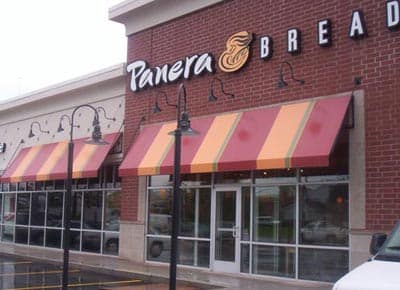
We all know that awnings are an economical and efficient way to shade a deck or patio from the hot glaring sun or cold winds and rain. In the old days (meaning if you’re over 40 and somewhere before 1960), awnings were used to keep a building shielded from the sun. These were folded up in the winter time to use the sun’s rays for heat.
Today, although awnings still provide protection from the elements, they are used to carry a message. Typically they’ll advertise the building name and/or communicate a name brand to let visitors know what is inside the building.
The business of awnings
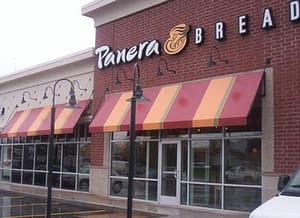 Often viewed as a minor segment of the sign industry, the awning segment provides opportunities for the sign professional to meet a customer’s needs on many levels. Awning design and installation of yesteryear is now in need of repair and the business of retrofitting and refurbishing is looking very bright. “The rebuild and repair business is very busy,” notes Chris Reber, Vice President of Illuminated Image. “There are a lot of awning designs out there that were made with aluminum frames. This makes the recover business a little easier because the solid structure is still there.”
Although many awnings were installed with quality products at their time of manufacture, variables like age, weathering, and new technologies have invigorated the demand for rehabbing existing awnings. Mike Tarak of Awning Partners has found that many of their customers are seeking new styles with improved materials for refurbishing their awnings. “We are finding that one of the reasons for rebuilding is to change to newer materials. We find that some customers prefer getting away from the grommet style and going to the staple-end method of awnings,” says Tarak. “The cost of production is much less, so from a labor standpoint the customer is getting a top-notch product at a bargain price.”
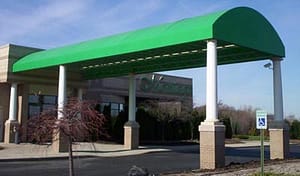 In addition to simply recovering older awning designs, many customers are seeking to change the old style to a new architectural design that reflects their business image as well as to flow with the new building designs and the city landscape. Peter Burnett of the Cooley Group, Sign and Awning Products division, has seen a significant amount of retrofit business due to the hurricanes these past couple of years, particularly in Florida. “We see folks buying large quantities of our new Weathertyte material for refurbishing existing structures in Florida. This increase in business is not only for replacing the damaged material, but we are also seeing people using the damage as a reason to redesign their awnings.”
Obviously, with all of the existing awnings come opportunities for repairing, refurbishing and redesigning awnings and awning signs.
Keeping up with trends
A smart player in the awning installation business will learn about all the new architectural styles, designs and innovations that exist today. He or she will seek and find new and better products to offer their customers. “With all of the new inks, printers and top coats that keep coming out, as well as the new creative digitally printed designs, there are more opportunities for the sign professional in this changing market,” says Burnett. “We are seeing a huge response to the new high performance composites because people want a new creative look, but with increased performance.”
Along with the traditional backlit awnings, many awning companies are now offering front-lit designs. Changing it up a bit is the key to being able to get in on the increasing demand for sign awnings. Some municipalities are not as strict regarding permitting for awnings and often only require that the designs keep in line with the parameters of the city architecture.
Chris Reber is finding that more customers are leaning toward more creative architectural designs than before. “The trend is more of a flip-flop effect. It used to be that most of the business was with illuminated awnings and that is where the priority was. Now, we are finding more customers desiring more architectural designs that will set them apart.” With this knowledge, a company can get ahead of the game by either hiring some creative designers or simply going out and finding cool designs that might appeal to customers.
Mike Tarak agrees, “We’ve had success with our architectural designs. It is simply just a matter of giving the customer what they want. Sometimes that requires educating them and having examples of previous jobs to show them.”
Getting on board
For the sign professional new to the awning business, getting started is not as hard as you might think. Businesses like Awning Partners offer a turnkey solution. “Once the sign professional has the dimensions, they can just send us the specs and we’ll either provide just the materials or provide the materials and take care of the installation. We can act as a revenue center for them.”
Burnett of Cooley suggests that you really do your homework before getting started. “It takes some time and knowledge, but someone already in the sign profession can offer sign awnings as part of their overall package, but they shouldn’t underestimate what is involved. Taking time to learn this end of the trade can produce some attractive profits in the future.”
To break into the sign awning business, make sure that you understand your market. Some cities might not even allow new awnings, while others may have restrictions on the design as well as the size of the lettering for the sign. Survey your own market to determine where you can expand into the awning business.
Companies like Illuminated Awnings will actually assist you in getting set up with your new venture. “We provide an information sheet to sign companies to use as a check-off list. This serves to educate them and helps them to sell the product,” says Reber. Using the tools and resources of the awning manufacturers will help you to learn about the industry while establishing a relationship with reliable, established companies.
While looking for new avenues to diversify your sales, don’t overlook the sign awning segment of the industry. With a little homework and partnering with good supply companies, you could be on your way to providing more variety for your customers.